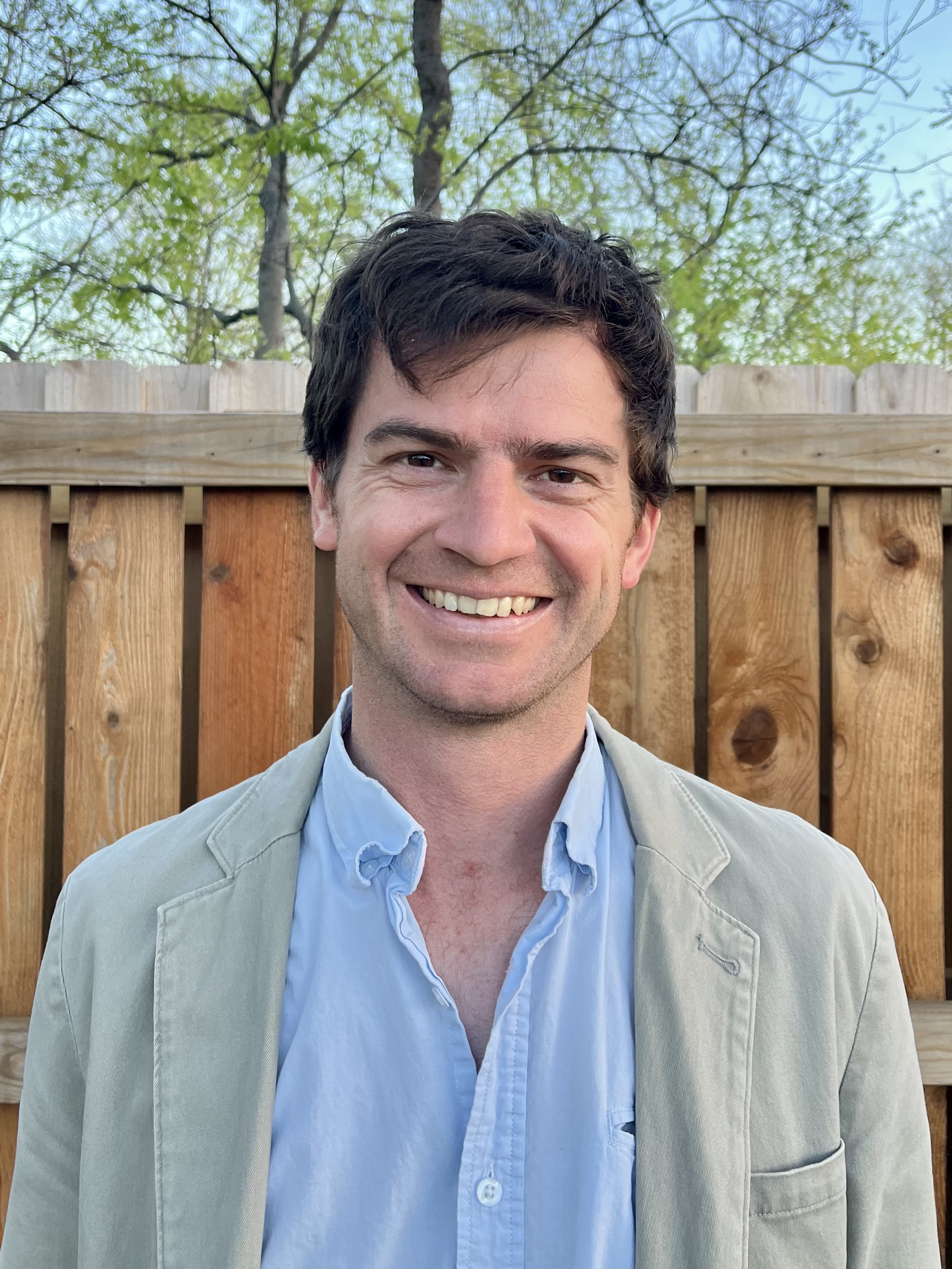
For Jonathan Cross, BA ’06, the road to becoming a professional artist led him not once but twice to the University of Dallas to study. Today, Jonathan’s work is based in Joshua Tree, California; he’s best known for his ceramics and sculpture that draw from a diverse array of sources, from ancient artifacts to post apocalyptic sci-fi. Cross attributes some of his success to luck, and knowing when to act on it, as well as his education, mentorship and – of course – creativity.

By Caitlin Bootsma, BA ’06
From printmaking to ceramics
During his undergraduate studies at UDallas, Jonathan primarily studied printmaking in what was then a recently developed art village. “My experience at UD as an undergraduate was fantastic,” Cross shares.
“I came into the department just as the new facilities were built. We had access to so many processes and ways to create art that things seemed endless. All of the professors at that time were highly proficient in their fields. The critique sessions were engaging and challenging. We learned a lot about the technical aspects of our fields so that a lack of knowledge did not hinder our creative ambitions.”
After graduation, Jonathan began working with well-known artists at the printing press Gemini G.E.L. He also pursued artistic work independently, including prints and drawings. But then, one day, his artistic interests began to shift.
“I was always measuring myself against the famous artists we were working with [at Gemini] and was dissatisfied with my works. I happened to go to the Huntington Gardens one day with my wife and visited their succulent green house. I saw amazing plants I had never seen before. Also each one of them was in a custom ceramic vessel hand made on a pottery wheel by a local artisan. I immediately went out and bought some plants. Then I tried to get some cool planters but I couldn't find any. So I decided to take a ceramic class at one of the local community colleges. I quickly fell in love with clay and started making planters with great joy and enthusiasm. I started looking forward to getting off from work at the print shop to get home to my little ceramic corner in our apartment and to make new vessels.”
With this chance encounter, Cross’s focus shifted to ceramics, which he pursued for several years, before deciding to seek out more education in the field. On the advice of Dan Hammett, former UDallas ceramics professor, Jonathan moved back to Dallas to attend some ceramic classes for the next few years. He explains that while he pursued this additional coursework at UDallas, “I started to move away from creating works that were just planters and started playing with more sculptural forms.”
Refining the Craft
Along with his education at UDallas, Jonathan mentions two artists who made a significant impression on him. Richard Serra, a sculptor known for his large-scale abstract works, understood the hard work it took to create. At 67, Serra “worked relentlessly for 7 hours that day, taking brief breaks to consume food and coffee. He had all four of the assistants [all significantly younger] running around in circles trying to keep up with his energy in the studio.” Crediting this experience with why he returned to his own art studies at UDallas, Jonathan recognized, “this is what it means to be an artist; this is the kind of work you have to put into it.”
After his second stint at UDallas, Jonathan attended Arizona State University for graduate school. During this time, he spent much of his “non-existent free time” driving several hours out to the studio of Don Reitz. It was through assisting Reitz – then 81 – with wood-firings that Jonathan learned all that went into being a wood-firing ceramic artist. “He had assistants, multiple kilns, a studio, and kiln facilities. All of this was nestled into a desert landscape. I saw my future in a space like that, which gave me an idea of what I needed to start working towards. Working with Mr. Reitz allowed me to experience all of the facets of a working studio and the hard work it took to maintain everything.”
A working artist
Today, Jonathan works at his desert studio he built himself, something he calls “an ongoing project.” He is truly a working artist and considers himself fortunate that his art provides a living for his family and keeps his studio going. Sometimes he takes on commissions, but often he creates whatever he feels like. “Some days I focus on incense burners, other days tequila cups, furniture or sculpture.”
“I draw influences from a variety of sources,” Jonathan says: “Ancient artifacts and architectural ruins, comic books, modern art, post apocalyptic sci-fi. I am trying to create works that appeal to a universal human sense of natural and constructed form. I imagine people from ancient Egypt or people 1000 years from now being able to appreciate these pieces.”
Wisdom gained
Looking back, Jonathan says his education at UD prepared him in several ways. “When I started building my own studio, I had the knowledge, which gave me the confidence to build kilns and develop spaces for my creative endeavors. Beyond that, UD instilled in me a love for learning. I converted to Catholicism just before attending UD. The curriculum and atmosphere of UD taught me what it meant to be a real Catholic.”
Jonathan says that his “artistic voice” has been developing since those years doing post bachelor studies at UD. His journey as an artist has continued since then as he has been “refining those ideas and developing ways to scale up the work. Also designing and building the kilns to accommodate these ideas.” Along with his education and experience, Jonathan says that luck has also been important in his creative development. “Just because things fall in your lap sometimes doesn’t mean they will work out. You need to be willing to take advantage of your situation…being able and willing to act on the luck is crucial.”
To see more of Jonathan’s work, visit www.jonathancrossstudio.com.