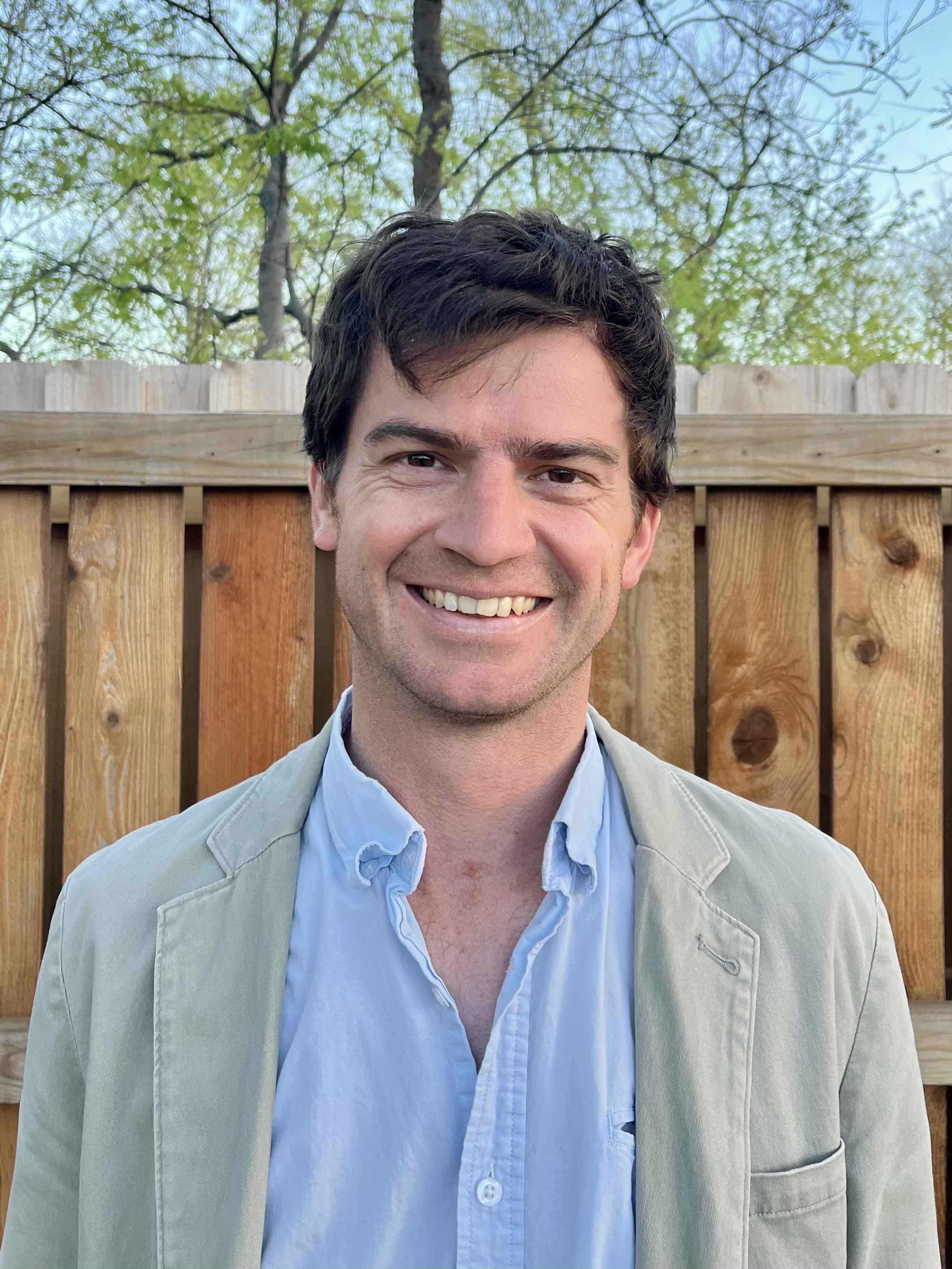
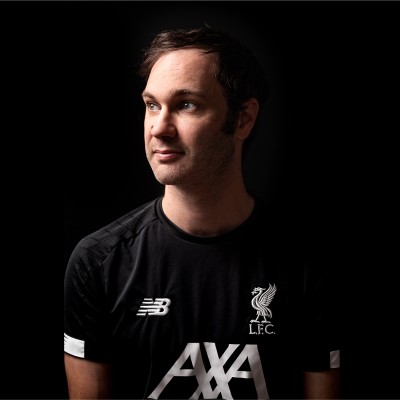
William Spearman, BS ’08, holds a position many British soccer fans might envy, Director of Research for the Liverpool Football Club. And while the connection between studying physics and analysis for one of the world’s most popular sports teams might not immediately be obvious, William explains how studying the sciences prepared him to help a world-renowned soccer team be more successful on the field.
By Caitlin Bootsma, BA ’06
Beginnings in Physics
William graduated from UD in 2008 with a degree in physics. Along with a robust education in the sciences, William says that his UD education provided him with the ability to “think outside the box” as well as to use the broader perspective gained from studying across a variety of disciplines outside his major. In his job today, he says “being able to apply modes of thinking from one domain to another is critical.”
William remembers fondly Dr. Richard Olenick, professor emeritus of physics, whom he calls a “UD legend,” and Dr. Sally Hicks, professor emerita of physics, whom he particularly credits for being a strong mentor. Outside of the sciences, William also learned a lot from the late Dr. Mark Lowery’s theology classes.
From PhD to Sports Analysis
After spending a year in Switzerland on a Fulbright award, William began his PhD in particle physics at Harvard. While working towards his doctorate, however, a tremendous discovery changed the field of physics: the discovery of the Higgs boson particle.
In 2012, scientists discovered the Higgs boson, a particle which provides mass to other particles. It is a fundamental building block of the universe, which scientists have been working to uncover for over half a century.
With this discovery, William explains, a loop had been closed in the study of physics. He decided that physics as a field no longer held as many opportunities for major discoveries and decided to pursue something new, taking his years of scientific expertise with him.
William spent several years at a tech company, during which time he experimented with sports data analysis. When he brought some of his explorations to a conference, William attracted the attention of the former head of research for Liverpool and thus began his foray into the world of professional sports.
Revolutionalizing the way teams play
For decades, sports teams have attempted to analyze the way players move, interact, and score (or fail to score) in order to make better decisions about which players to acquire and even how to coach them.
The default mode of analysis had been to track what happened during games, like passes and goals, and use that data to inform decisions. But William stepped into a new kind of data analysis that was gaining traction — tracking not only the concrete things like goals, but also all of the ways in which soccer players move and interact.
William calls this sort of analysis the “Wild West,” in which there was lots of room for a doctor in physics to apply new principles to analysis. Visualizing players as dots on the field, he has created models that have helped inform personnel decisions and provide tactical recommendations.
“Dots are somewhat more similar to physics than you would think,” William explains, due to the spatial nature of the game. Over the last 8.5 years, William has made and improved models which allow analysts to get a better sense of all 22 players on the pitch — who is on the ball, who is tired when, and the dynamics of the players on the field with one another and the opposing team.
This analysis can make a huge difference when it comes to signing players. William recounts that in 2023, most of Liverpool’s midfield was getting older or their contracts were expiring. His data analysis gave Liverpool’s leadership the information they needed to make the best selections to rebuild their midfield section.
A foundation that made a difference
A UD education, as alumni know, cultivates graduates who know how to think, not just what to think. The breadth of understanding provided by the Core Curriculum prepares graduates to excel beyond their fields and make connections that expand their careers in natural but unexpected ways. William’s impact on the world of international sports is precisely because of his physics degree, and he has become an example of how UD cultivates the brightest minds to become leaders who offer insights and meaningful contributions to the world.