By Clare Venegas, VP, Marketing & Communications
The monastic life stands in such stark contrast to modern life that creating an entire
podcast teaching people how to incorporate monastic practices in their own lives seems
like a niche passion project at best; a fool’s errand at worst.
But place that podcast on Hallow–arguably the most popular prayer and meditation app
in the world–and suddenly millions are tuning in to learn from Catholic monks how
to cultivate their own interior spiritual life.
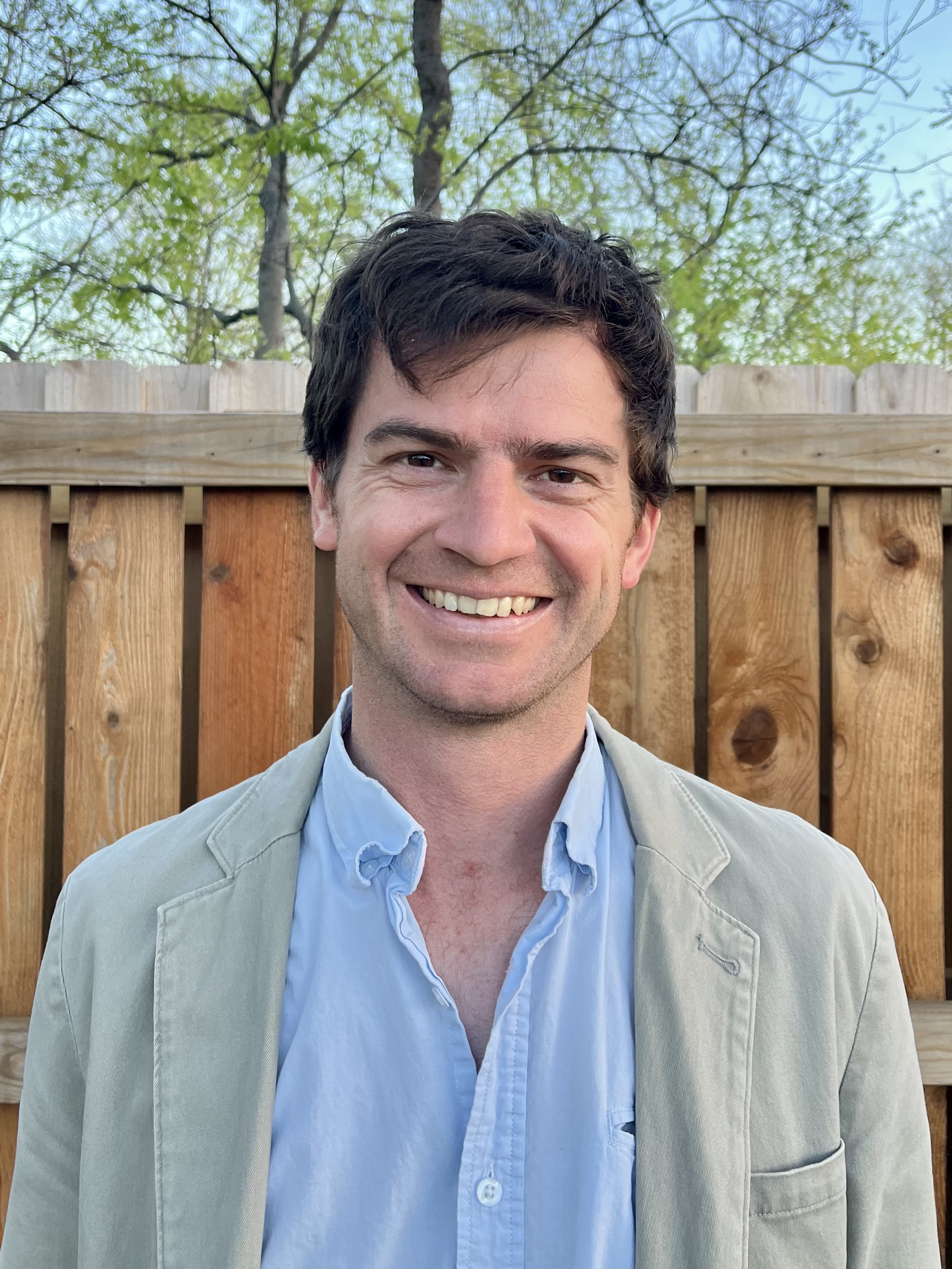
One of those monks is Fr. John Bayer, O. Cist., MA ’12, BA ’06, a Cistercian at Our Lady of Dallas and adjunct theology
professor at the University of Dallas. Fr. Bayer shared with us how it came to be
that millions can hear his insights on the app, and how he sees it as an opportunity
to spread valuable spiritual insights of monastic life with the world.
Hallow’s “Monk Mindset” reaches millions of people who may never step inside a monastery. What drew you
to this project, and how do you see it extending the Cistercian charism into the digital
public square?
At [the] SEEK25 [conference] in Washington DC, someone working for Monk Mindset asked
if she could record me answering a few questions about the spiritual life. At the
end of our conversation, she asked if we could discuss the possibility of future collaboration
and if she could send me an agreement. I said sure, and that I would discuss any potential
agreement with my abbot. In short, it seemed like a relatively easy task: answer vital
questions about the spiritual life and allow someone else to spread the word through
the digital methods so popular today. At least at a conceptual level, I imagine this
is a successful way to spread awareness about monastic life. However, watching a reel
on social media is not a great way to actually experience monastic life. So, my hope
is that these clips on social media inspire people to pray personally, to attend the
liturgy, to read Scripture and enter into spiritual communion with other people. Then
the monastic life — which is not a virtual one — would in some sense truly be extended.
How do monastic practices help laypeople, especially busy professionals, reclaim focus and purpose in their daily lives?
I think the witness of monastic life has an essential gift to offer the world: it is the synthesis of prayer and life, or ora et labora (to use a popular phrase). Most people seem "too busy" to add another discipline or attend another event — however noble the discipline and event might be. What people really need, I think, is to learn to be present to what they are already doing, and to see its spiritual depths and the opportunity within every moment to live for love and encounter God. Monastic life, understood as a way of consecrating the entire rhythm of your day as a prayer (eating, working, communicating, managing possessions, recreating and so on), is something the world is thirsting for— even if it doesn't always know it. I think the essence is to slow down or pay attention well enough to understand that God is here in this present moment. Do what you do as an expression of friendly communion with God. I think that's the "monk mindset" most essentially.
You’ve long been involved in the intellectual and spiritual formation of UD students. How does your participation in “Monk Mindset” reflect the same educational mission—forming minds and souls for the pursuit of truth?
I understand UDallas as a university that exists “Ex Corde Ecclesiae”, out of the Church's own heart. Fired by the Church's missionary impulse, she wants everyone to learn to love truth and justice–veritatem, justitiam diligite [in Latin]. She seems to me to aspire to be able to reach the whole country, even the world. Participation in Monk Mindset feels like an extension of that ambition to go to the margins and reach everyone with the saving truth of the Gospel, and with the power of an intellectual and artistic tradition seeking to be transformed by it.
For alumni raising families or building careers, what practices or mindsets can help
them cultivate a sense of rootedness, even amid constant change?
I think prayer is the most essential. When we learn to pray truly, we learn to draw
closer to the still center of reality, to the heart of God, and that will give us
the greatest roots, for then we will be building our lives as Jesus says, namely,
on the rock of God's Word. Concretely, study the faith and frequent the sacraments.
Let the fullness of the Gospel shape your heart, and then allow yourself the freedom
to pray.