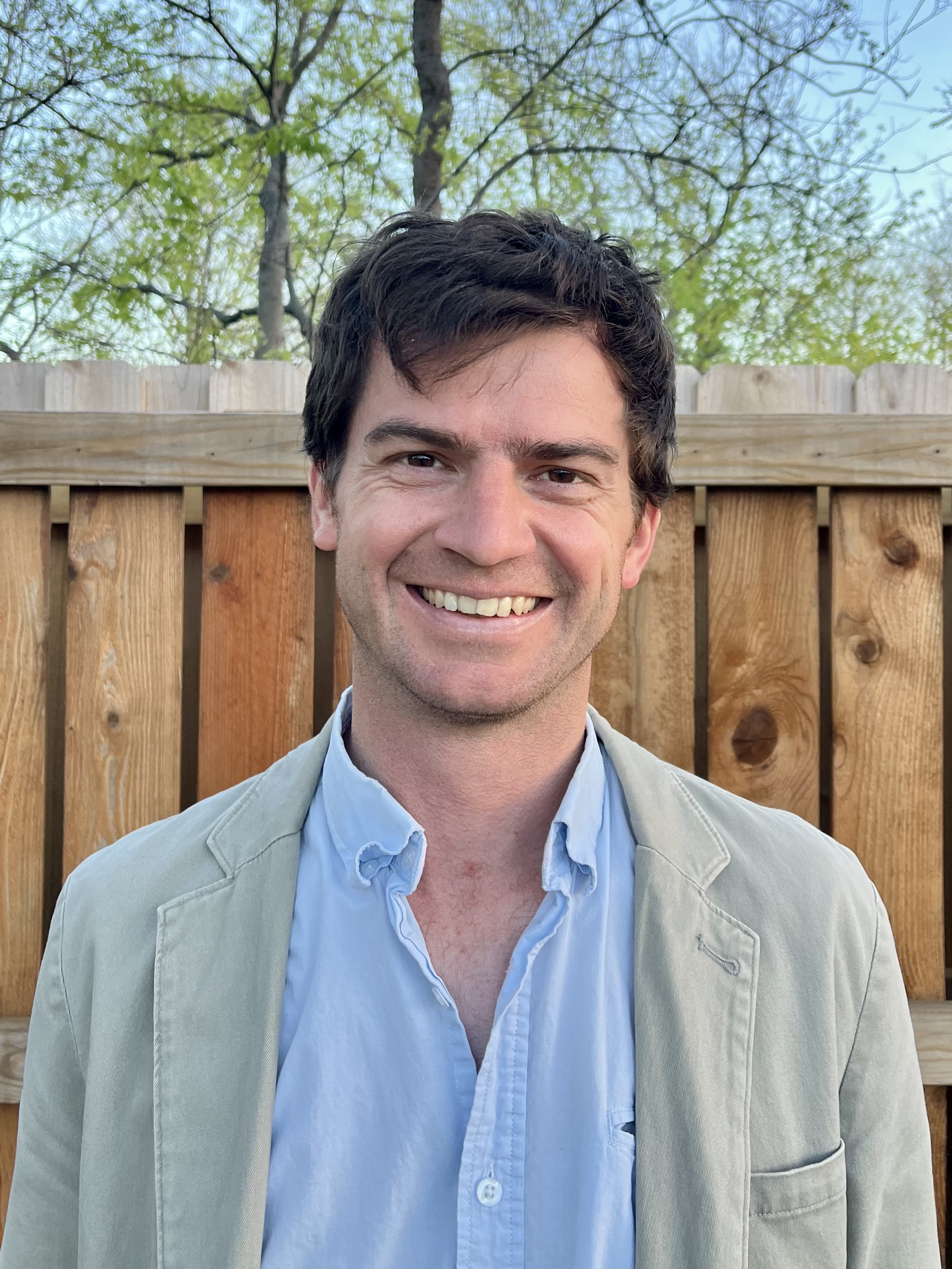
Double alumnus and woodworker Mitchell Blackburn sits down to share the story behind his meaningful commission. He attended Mass and received the sacraments as a student at the Church of the Incarnation. Now, his handcrafted tabernacle stand and sacristy cabinet will grace every liturgy and Holy Hour celebrated in the church for generations to come.

Tell us about your time at the University of Dallas.
I majored in English and graduated in 2016. I finished my Master of Arts in Politics in 2024.
I actually came to UD as a seminarian. I was from Houston and entered seminary right
after high school as a candidate for the Archdiocese of Galveston-Houston. After my
junior year I left seminary, but I finished at UD. That is when I was able to switch
to an English degree. I had taken enough English credits that switching from philosophy
to English was no problem, and I just fell in love with their English program.
What made you switch from philosophy to English?
From the moment I had Dr. Wegemer as my Lit Trad professor, I knew I wanted to switch
to English. I saw him at the Feast of Annunciation Mass during which my tabernacle
stand was blessed. He was the first one after Mass to come up and tell me: “Beautifully
done on the stand.” So it was pretty cool. Full circle moment.
So you were commissioned to create the tabernacle stand. How did you get into this project?
There are a few people at the university who know that I do woodworking. Some of them
have bought some engraved images from me. So I'm not exactly sure who referred to
me. But last summer, I was contacted by the Dominican priest who was in charge of
the UD church at the time. And then later on, I was contacted again and they put me
in touch with Ashton Ellis (UD Vice President for Development and University Relations), who coordinated everything
between the anonymous donors and the company working in Spain providing the blessed
vessels and the tabernacle.
How was the process, and were there any challenges?
They wanted to make sure everything fit well in the church and that it would match
the pews and everything else. They had already gotten the company from Spain to do
some of the design work, so the dimensions were straightforward. I added the trim
work and the top trim. I also put cove cuts on it to give it a little bit more of
a dimension at the top.
The trim work was new to me, but I figured it out. Usually if you're making trim like
that, you can use a molder to make a crown molding or something similar, I didn't
have that. So I had to make the cove cuts with my table saw, which is kind of an interesting
process, but it wasn't too bad once I figured out how to do it.
Tell us more about the tabernacle stand. Did you also build a cabinet for the sacristy?
It is made of oak. I purchased it in Arkansas because I still have my wood shop over there where I had a sawmill and cabin building business with my brothers until we moved to Oklahoma. So I went there and spent about three weeks working on the tabernacle stand, and in the same commission they had me build a cabinet for the sacristy.
Both pieces are made from the same oak, though they are not the same color. The existing
cabinets in the sacristy are not stained dark, so I left those in their natural oak
color, which matches reasonably well. For the tabernacle stand in the church, I asked
what kind of wood and stain had been used for the pews. They got that information
from the company that made them, and I used the same black walnut stain on the oak
to match.
Looking back, what has your UD education meant to you?
I loved the integrated nature of UD’s Core Curriculum and truly loved their Literature
program. It was a great place for me to grow spiritually and intellectually. My experience
in public school had soured me on education until I attended UD. The impact was so
great that I have spent the majority of my time since graduating teaching in some
capacity. My time there was formative and I have always considered attending the university
as one of the greatest graces of my life.
Returning to get my Master’s was also a great blessing. I started it while teaching
in Fort Worth and after taking a break from it for a few years I was generously welcomed
into the Politics program by my thesis advisor, Dr. Richard Dougherty.